
7 kurze Einheiten · 46 Minuten
Es ist 23 Uhr und der Kopf läuft wieder los.
Nicht jedes Grübeln ist die gleiche Schleife. Diese Vertiefung zeigt Dir, welche Form heute läuft, und welche Unterbrechung wirklich zu ihr passt.
Von Markus Fordemann. Für Köpfe, die nicht aufhören. 46 Minuten, eine konkrete Unterbrechung pro Schleife.
Markus Fordemann
Guide
Kein Zeitdruck. Lerne, wann es Dir passt.
Einmaliger Kauf. Für immer Deins. Geh in Deinem eigenen Tempo.
Was sich danach verändert
- 1Du erkennst, welche Schleife in Deinem Kopf gerade läuft
- 2Du nutzt die Unterbrechung, die zu dieser Form passt, egal ob Vergangenheit, Zukunft oder Entscheidung
- 3Du merkst, was bei Dir wirklich wirkt, nicht das, was angeblich helfen müsste
- 4Du hast eine kleine Karte mit Deinen eigenen Bewegungen, die Du dabei haben kannst
- 5Du hängst die Unterbrechung an einen Moment, den Du sowieso schon hast
Passt das zu Dir?
Hier wirst Du Dich vielleicht wiederfinden
- Dein Kopf spielt alte Gespräche immer wieder ab
- Du probst um Mitternacht den morgigen Tag durch
- Du bleibst an kleinen Entscheidungen hängen, weil sie nie fertig abgewogen sind
- Allgemeine Achtsamkeitstipps haben bei Dir nie wirklich gehalten
- Du willst eine konkrete Bewegung, nicht das nächste lange Protokoll
Hier passt es vermutlich nicht
- Du suchst eine Behandlung für eine diagnostizierte Zwangs- oder Angststörung
- Du hättest lieber einen langen, strukturierten Kurs als kurze, benannte Werkzeuge
Warum diese Vertiefung von Markus
Markus hat seine eigenen Schleifen jahrelang studiert. Er kennt die 23-Uhr-Wiederholung, die Probe, die nicht endet, und die kleine Entscheidung, die einen ganzen Sonntag verschluckt. Diese Vertiefung ist das, was er sich mit 33 gewünscht hätte, als allgemeine Achtsamkeit nicht ausreichte.
Zeit & Energie
1 Module · 7 kurze Einheiten · 46 Min.
7 Einheiten zu je etwa 6 Minuten. Lies in Deinem eigenen Tempo. Komm zurück, wenn Du es brauchst.
Jede Einheit ist kurz genug für die Tage, an denen Du eh schon kaum noch Kraft hast. Kein Aufbau, nichts zu leisten, keine App.
Über diese Vertiefung
Was Du lernen wirst
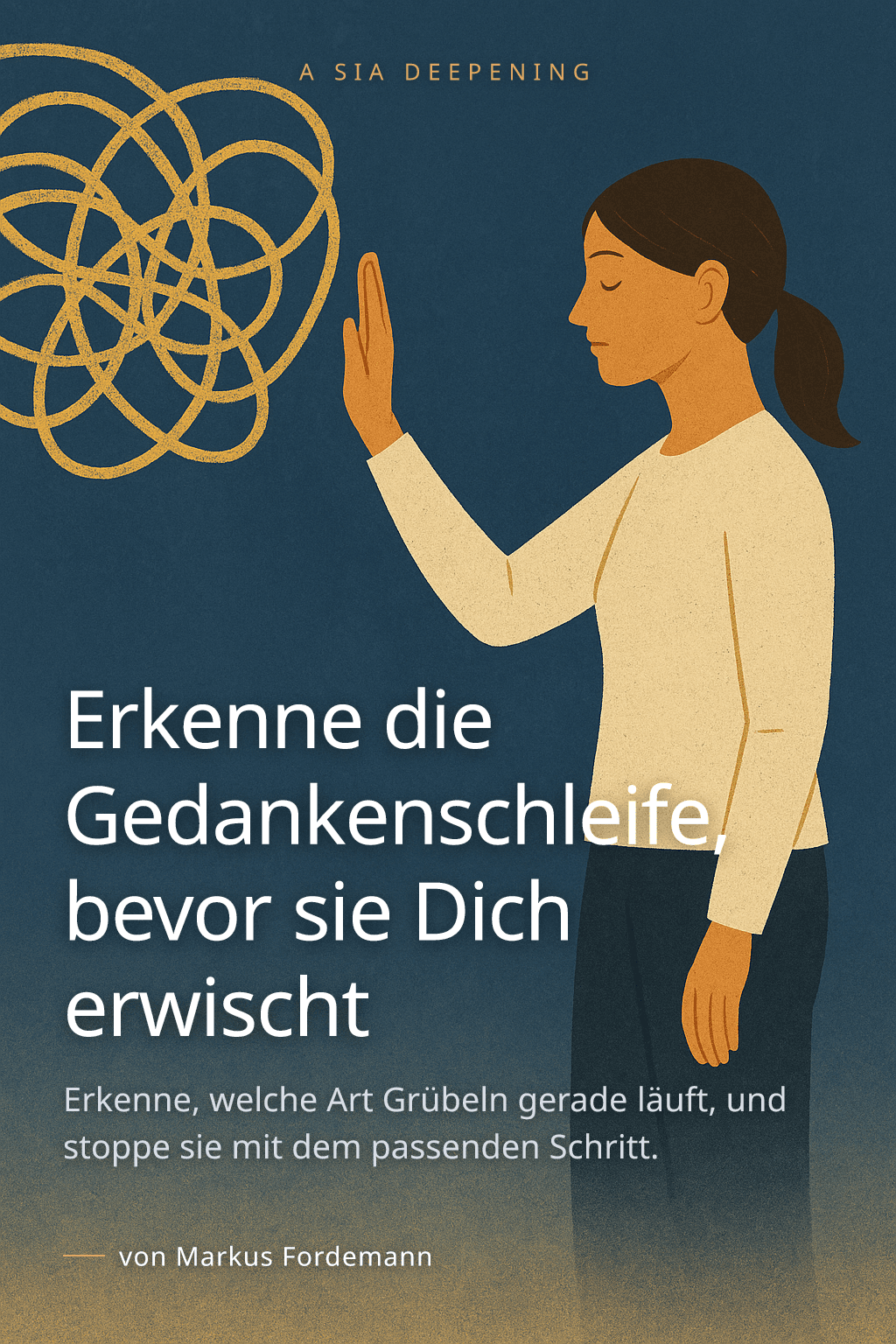
1Erkenne die Gedankenschleife, bevor sie Dich erwischt7 Einheiten
Lerne zu erkennen, welche Art von Grübeln gerade läuft und welche kleine Unterbrechung wirklich dazu passt.
- Warum Dein Kopf nachts um 23 Uhr alles nochmal abspieltKostenlose Vorschau6m
- Welche Form hat Deine Schleife gerade?7m
- Eine Gesprächs-Schleife aus der Vergangenheit unterbrechen7m
- Eine Zukunfts-Schleife unterbrechen7m
- Eine Endlosschleife der Entscheidungslähmung unterbrechen7m
- Welche Unterbrechung hat bei Dir wirklich funktioniert6m
- Den Unterbrecher an einen Moment hängen, den Du schon hast6m
Kostenlose Vorschau
Lies eine Beispiel-Einheit, um zu sehen, ob diese Vertiefung das Richtige für Dich ist.
Warum Dein Kopf nachts um 23 Uhr alles nochmal abspielt
Es ist 23:14 Uhr. Im Zimmer ist es dunkel. Dein Handy liegt umgedreht. Und der Satz aus dem Meeting heute Morgen, der, bei dem Du eine halbe Sekunde zu lang gezögert hast, bevor Du geantwortet hast, läuft wieder. Du drehst Dich um. Er läuft wieder. Du versuchst, an morgen zu denken. Er läuft wieder, lauter.
Wenn Du Dich jemals gefragt hast, warum schärfer nachdenken es nicht aufhören lässt, machst Du nichts falsch. Dieselbe sorgfältige Wahrnehmung, die Dir hilft einen Raum zu lesen, einen Tonwechsel zu erwischen, oder zu spüren, was jemand wirklich meinte, ist um 23 Uhr immer noch an. Tagsüber hat sie etwas zum Arbeiten: Menschen, Geräusche, kleine Entscheidungen. Nachts, wenn die Reize weg sind, wendet sie sich nach innen und kaut auf dem, was übrig ist.
Das nennen wir eine Schleife. Kein Fehler. Kein Zeichen, dass in Dir etwas kaputt ist. Ein Muster, das Dein Kopf läuft, wenn er mehr Verarbeitungskraft hat als Material. Dieser Kurs gibt Dir ein kleines Modell zum Arbeiten damit: Erkenne / Benenne / Stoppe. Du erkennst, dass eine Schleife läuft. Du benennst, welche der drei Formen es ist. Dann stoppst Du mit dem einen Stopper, der zu dieser Form passt, statt mit einem allgemeinen Beruhigungs-Trick, der nicht passt.
Probier das jetzt, während Du liest: denk an einen Gedanken, der in den letzten ein, zwei Tagen gekreist ist. Vielleicht ein Gespräch. Vielleicht eine Sorge wegen nächster Woche. Sobald Du ihn hast, sag leise, laut oder im Kopf, „die Schleife läuft." Das ist alles. Du löst sie nicht. Du markierst sie.
Dieser Satz ist der Schritt, den diese Lektion lehrt. Die Schleife läuft. Klingt klein. Was er macht, ist die zweite Sache zu unterbrechen, die meistens passiert, nachdem Du bemerkst, dass Du feststeckst: die Scham, festzustecken. Die meisten sensiblen Menschen spielen nicht nur den Satz wieder ab. Sie spielen den Satz wieder ab, dann denken sie warum hänge ich da noch dran, was ist mit mir los, normale Menschen schlafen. Der Satz „die Schleife läuft" behandelt das Bemerken als Daten, nicht als Urteil. Es ist der Erkenne-Schritt des Modells, und es ist das Einzige, was Du aus dieser Lektion brauchst.
Bemerke, wie der Satz bei Dir gelandet ist. Manche spüren einen kleinen Abfall in der Brust, wie ein Licht, das angeht. Andere spüren noch nichts. Beide Reaktionen machen Sinn. Es muss heute Nacht nicht funktionieren, damit es zählt.
Als Nächstes, in Welche Schleifenform hast Du gerade, lernst Du den 20-Sekunden-Check, der Dir sagt, ob die Schleife um die Vergangenheit, die Zukunft, oder eine Entscheidung geht, die Du nicht abschließen kannst.
Wer diese Vertiefung erstellt hat
Markus Fordemann
Vollständiges Profil ansehen →
Einmaliger Kauf. Für immer Deins. Geh in Deinem eigenen Tempo.
Zuerst eine kostenlose Einheit lesen
7 Einheiten
Erstellt für hochsensible Menschen
Diese Vertiefung enthält
- 7 Einheiten in 1 Kapiteln
- 46 Minuten Inhalt
- ✓Lebenslanger Zugang
- ✓Lerne in Deinem eigenen Tempo
- ✓PDF zum Herunterladen (EN, DE wo verfügbar)
Ehrliche Antworten auf häufige Fragen
Lerne ich da nicht einfach, meine Gedanken zu unterdrücken?▾
Nein. Unterdrückung funktioniert nicht, und die Vertiefung verlangt das auch nicht. Die Unterbrechungen sind körperlich, sie verschieben den Zustand, nicht den Gedanken.
Ich habe schon Verhaltenstherapie gemacht. Ist das anders?▾
Ja. Die Therapie arbeitet am Inhalt des Gedankens. Diese Vertiefung arbeitet an der Form der Schleife. Du wirst beides vermutlich gut kombinieren können.
Was, wenn ich nicht erkenne, welche Form gerade läuft?▾
Genau dafür ist Einheit 2 gemacht. Sie führt Dich an Beispielen durch die drei Formen, bis das Erkennen Deiner eigenen klar wird.
Ist das gegen Angst?▾
Es überschneidet sich mit Angst-Mustern, ist aber keine Behandlung einer Angststörung. Für diagnostizierte Zustände geh bitte zu einer Fachperson.
Über diese Vertiefung
Diese Vertiefung ist zur eigenständigen Anwendung gedacht. Sie ist keine Therapie, keine medizinische Behandlung und ersetzt keine professionelle Begleitung. Sie ist für Menschen gemacht, die ihre eigenen Muster verstehen und etwas Kleines daraus bauen wollen.
Nicht passend, wenn
- Diagnostizierte Erkrankungen, die ärztlich behandelt werden sollten
- Akute psychische Krisen
Wenn Du sofort Hilfe brauchst
Wenn Du gerade in einer akuten Krise bist oder Gedanken hast, Dir etwas anzutun: Du musst da nicht allein durch. In Deutschland erreichst Du die TelefonSeelsorge rund um die Uhr unter 0800 111 0 111 oder 0800 111 0 222, kostenlos und anonym. In Österreich erreichst Du die TelefonSeelsorge unter 142. In der Schweiz hilft die Dargebotene Hand unter 143. Eine internationale Liste kostenloser Hilfsangebote findest Du auf https://findahelpline.com.